DESCRIPTION
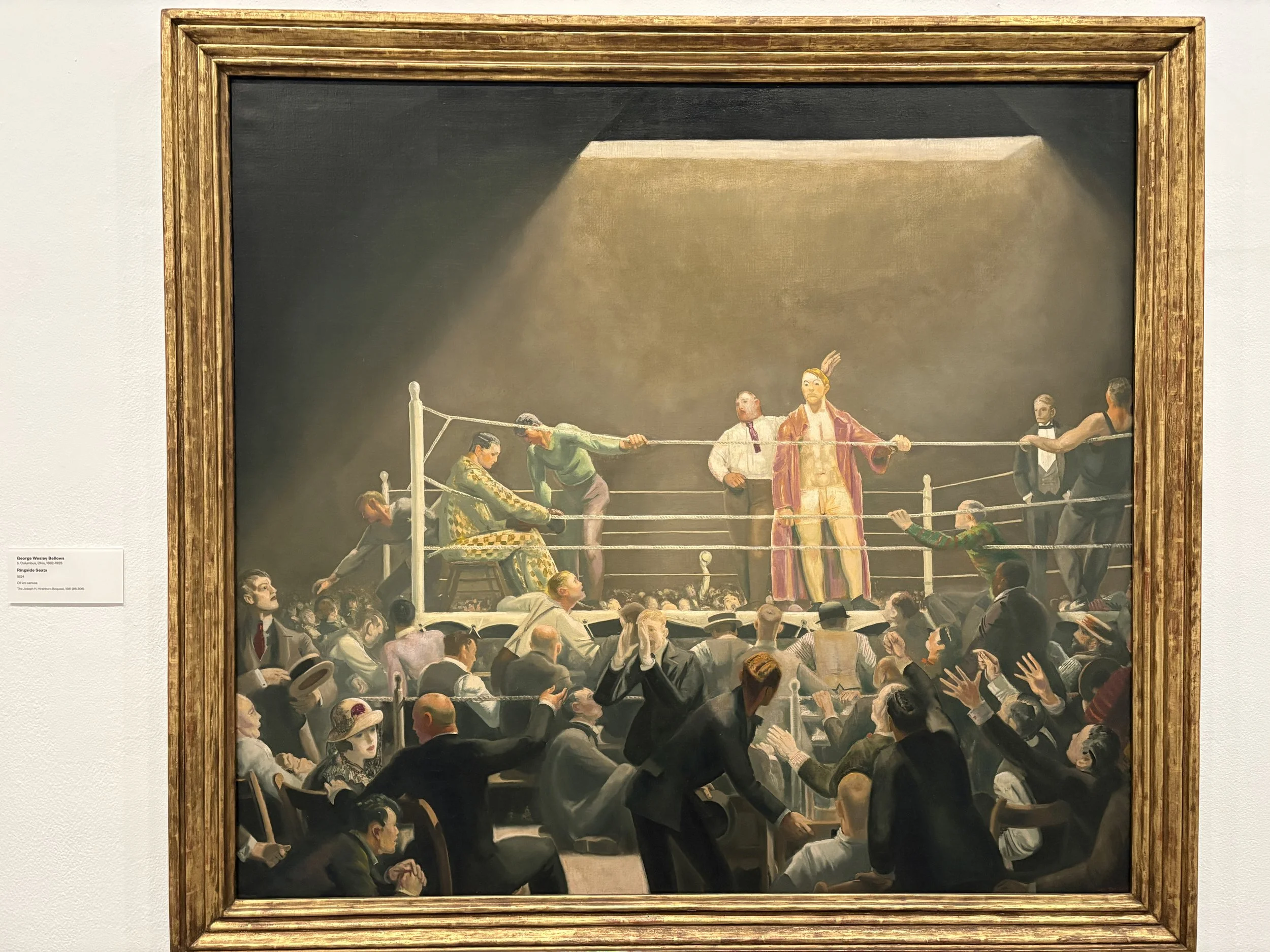
George Wesley Bellows’ Ringside Seats is a striking and visceral depiction of early twentieth century American boxing culture, capturing both the raw physicality of the sport and the charged atmosphere of its spectators. Painted with Bellows’ characteristic energy and boldness, the work immerses viewers in a moment of intense action, placing them almost uncomfortably close to the violence unfolding in the ring. The composition is dominated by two fighters locked in combat, their bodies contorted with effort as they exchange blows. Bellows uses exaggerated movement and thick, dynamic brushstrokes to emphasize the brutality and immediacy of the scene, making the viewer feel as though they are part of the crowd pressed tightly around the ring. One of the most compelling aspects of Ringside Seats is the way Bellows portrays the audience. Rather than relegating them to the background, he gives the spectators a powerful presence, their faces animated with excitement, tension, and even aggression. The crowd is not passive; it becomes an integral part of the event, reflecting the social fascination with boxing during this era. The expressions range from exhilaration to shock, suggesting a complex relationship between entertainment and violence. Bellows seems to invite the viewer to question why such brutality draws such intense attention and enthusiasm.
The lighting in the painting further heightens the drama. Bright, almost harsh illumination falls on the fighters, making their bodies stand out against the darker, more chaotic background of the audience. This contrast directs the viewer’s focus to the center of the action while also reinforcing the theatrical nature of the event. The ring becomes a stage, and the boxers are performers whose suffering is on display for public consumption. Bellows’ use of light and shadow also adds depth to the composition, guiding the eye through the layers of figures and creating a sense of crowded immediacy. Bellows was associated with the Ashcan School, a group of artists known for depicting the gritty realities of urban life, and Ringside Seats exemplifies this approach. Rather than idealizing his subject, Bellows presents boxing in all its rawness, highlighting the sweat, strain, and violence inherent in the sport. At the same time, the painting captures a distinctly modern energy, reflecting the fast paced, often harsh environment of early twentieth century city life. The scene is not sanitized or romanticized, instead it confronts the viewer with the intensity of both the physical contest and the social spectacle surrounding it. Ringside Seats is more than just a depiction of a boxing match. It is a commentary on human nature, spectatorship, and the allure of violence. By placing the viewer so close to the action and emphasizing the reactions of the crowd, Bellows blurs the line between observer and participant. The painting challenges us to consider our own role as viewers and to reflect on why scenes of conflict and struggle continue to captivate audiences. Through its dynamic composition, vivid detail, and emotional intensity, Ringside Seats remains a powerful and thought-provoking work that captures a unique moment in American cultural history.
